Release Notes: v0.1.0
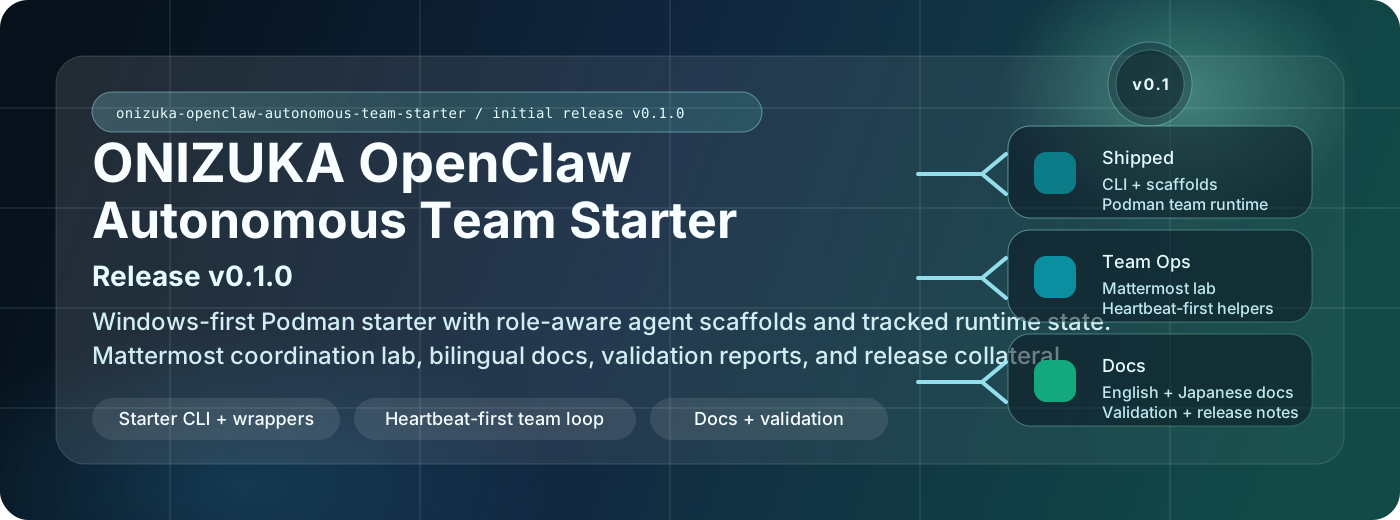
v0.1.0 is the first tagged release of onizuka-openclaw-autonomous-team-starter. There is no previous tag, so this page covers the full shipped history that now lives on main, from the initial Podman starter through the current heartbeat-first Mattermost team flow and release collateral.
Scope
- Initial release: full repository history through
v0.1.0 - Delivery surfaces: Python CLI, PowerShell wrappers, tracked
.openclawscaffolds, bilingual VitePress docs, Mattermost plugin bundles, and validation artifacts - Companion article: Launching v0.1.0
Highlights
A Windows-first starter surface for single pods and small teams
- Ships a Python package and CLI under
src/openclaw_podman_starter/cli.pywith PowerShell entrypoints inscripts/forinit,doctor,launch,status,logs,stop,print-env, Mattermost management, and autostart helpers. - Supports both single-instance and scaled multi-instance flows, including dry-run launch and stop paths that are exercised in CI.
- The same surface exposes operator-friendly checks such as
doctor,print-env, livestatus, and targetedlogs, so the repo is not just a manifest dump. - Windows startup integration is also included through
scripts/register-autostart.ps1andscripts/autostart-status.ps1for operators who want the local team environment to rehydrate on login.
Managed per-agent state, pods, and persona scaffolds
- Generates tracked
.openclaw/instances/agent_*/state with per-agentopenclaw.json,pod.yaml, and workspace files such asAGENTS.md,SOUL.md,IDENTITY.md,USER.md,HEARTBEAT.md,TOOLS.md, andBOOTSTRAP.md. - Keeps a sanitized subset of generated runtime state in the repository so default manifests and persona scaffolds can be reviewed and versioned instead of staying opaque.
- The release started as a three-agent triad and then expanded to a six-seat layout with per-instance persona, model, and heartbeat interval overrides, which is why the tracked
.openclawset now includes both the original triad seats and the later scaled seats.
Mattermost communication lab with heartbeat-first autonomy
- Includes
mattermost init,launch,seed,smoke,lounge enable,lounge status, andlounge run-nowflows through the starter CLI and the PowerShell wrappers. - Ships heartbeat-first Mattermost helper tools in
scripts/mattermost_tools/for state reads, posting, reactions, and public-channel creation. - Supports per-instance autonomy interval overrides and scaled persona/model scaffolds for a six-seat communication setup.
- The current helper path is intentionally stateless: helper scripts do the transport work, while the workspace scaffolds and
HEARTBEAT.mddefine how each teammate should behave. - The shipped validation evidence includes both provider/model reports and a dedicated Mattermost autonomy QA inventory, so the repo contains operator-facing proof instead of only setup code.
Bilingual docs, CI, and GitHub Pages
- Publishes English and Japanese docs from the VitePress site under
docs/. - The Windows CI workflow runs
uv sync, Python compilation, unit tests, docs build, CLI help, single-instance init/print-env, and multi-instance dry-run launch/stop checks. - GitHub Pages deploys the docs site from
main, so release notes and walkthroughs can live in the same published surface as the operator guide. - The docs set is not limited to quickstart text. It already includes separate pages for quickstart, autonomous-team behavior, configuration, and validation in both languages, and this release adds a docs-native release note plus a companion walkthrough article.
Docs and assets shipped in this release
- Includes validation reports for the verified OpenClaw pod paths plus a Mattermost autonomy QA inventory in
reports/. - Ships experimental Rokuseki Mattermost branding plugin bundles under
mattermost-plugins/together with UI verification screenshots inreports/. - The release header SVG is derived from the repository's existing header branding so the GitHub release and docs pages use the same visual family as the main project surface.
What you can do immediately after installing
1. Boot a local team
- Run
uv sync, copy.env.exampleto.env, and use.\scripts\init.ps1 --count 3to seed a triad. - Use
.\scripts\launch.ps1 --count 3for the actual runtime or--dry-runto inspect what would be launched before touching Podman.
2. Give the team a voice
- Edit each generated
SOUL.md,IDENTITY.md,USER.md, andHEARTBEAT.mdunder.openclaw/instances/agent_00X/workspace/. - Those files are the main operator-controlled layer for changing the team from a deployment scaffold into a debate squad, writing room, or verification group.
3. Bring up the communication lab
- Use
.\scripts\mattermost.ps1 init,launch, andseed --count 3to create the local Mattermost environment and bot users. - Use
.\scripts\mattermost.ps1 smoke --count 3for the safest first proof, thenlounge enablewhen you want recurring autonomous chatter instead of human-led mentions only.
4. Inspect and tune runtime behavior
print-env,status,logs, and the tracked.openclawsubset make it possible to reason about what each instance will do before and after launch.- The repo also includes dry-run stop coverage and operator docs for the validation and configuration layers, which helps when the target machine differs from the validation machine.
Tooling And Automation
pyproject.tomlpublishes the starter asonizuka-openclaw-autonomous-team-starterversion0.1.0..github/workflows/ci.ymlprotects the Python package, docs build, and dry-run operator flows on Windows..github/workflows/pages.ymlturns the VitePress output into a published docs site that can host release collateral.- The test suite in
tests/test_cli.pycovers scaled state generation, autonomy interval overrides, Mattermost config wiring, secret handling in tracked manifests, and helper runtime support for multiple provider paths.
Validation coverage
Beyond the commands run for this release task, the repository already ships code-backed runtime evidence for:
zai/glm-5-turboollama/gemma4:e4bollama/gemma4:e2b
Those validated model paths are documented in the repo's validation surfaces and backed by the shipped reports under reports/.
Experimental add-ons in this release
mattermost-plugins/jp.sunwood.rokuseki-brand/packages an optional branded channel intro and header treatment fortriad-lab.mattermost-plugins/jp.sunwood.rokuseki-sidebar-icon/packages an optional experimental sidebar icon override kept separate from the main branding bundle.- The release also ships screenshots showing these plugin states in
reports/, so readers can inspect the UI evidence without rebuilding the bundles first.
Validation
This release task was validated with the commands below:
powershell
powershell -ExecutionPolicy Bypass -File D:\Prj\gh-release-notes-skill\scripts\collect-release-context.ps1 -Target main
powershell -ExecutionPolicy Bypass -File D:\Prj\gh-release-notes-skill\scripts\verify-svg-assets.ps1 -RepoPath . -Path assets/header.svg,assets/release-header-v0.1.0.svg,docs/public/release-header-v0.1.0.svg
uv run python -m compileall src scripts\mattermost_tools
uv run python -m unittest discover -s tests
uv run openclaw-podman --help
npm --prefix docs run docs:build
Historical runtime evidence that also ships in the repository:
Notes on scope
- This is an initial release note for a repository with no previous tag, so the page intentionally covers the full starter surface rather than a tag-to-tag delta.
- The Rokuseki branding bundles are optional and experimental. They are included as release collateral and lab extensions, not as a required part of the base starter flow.